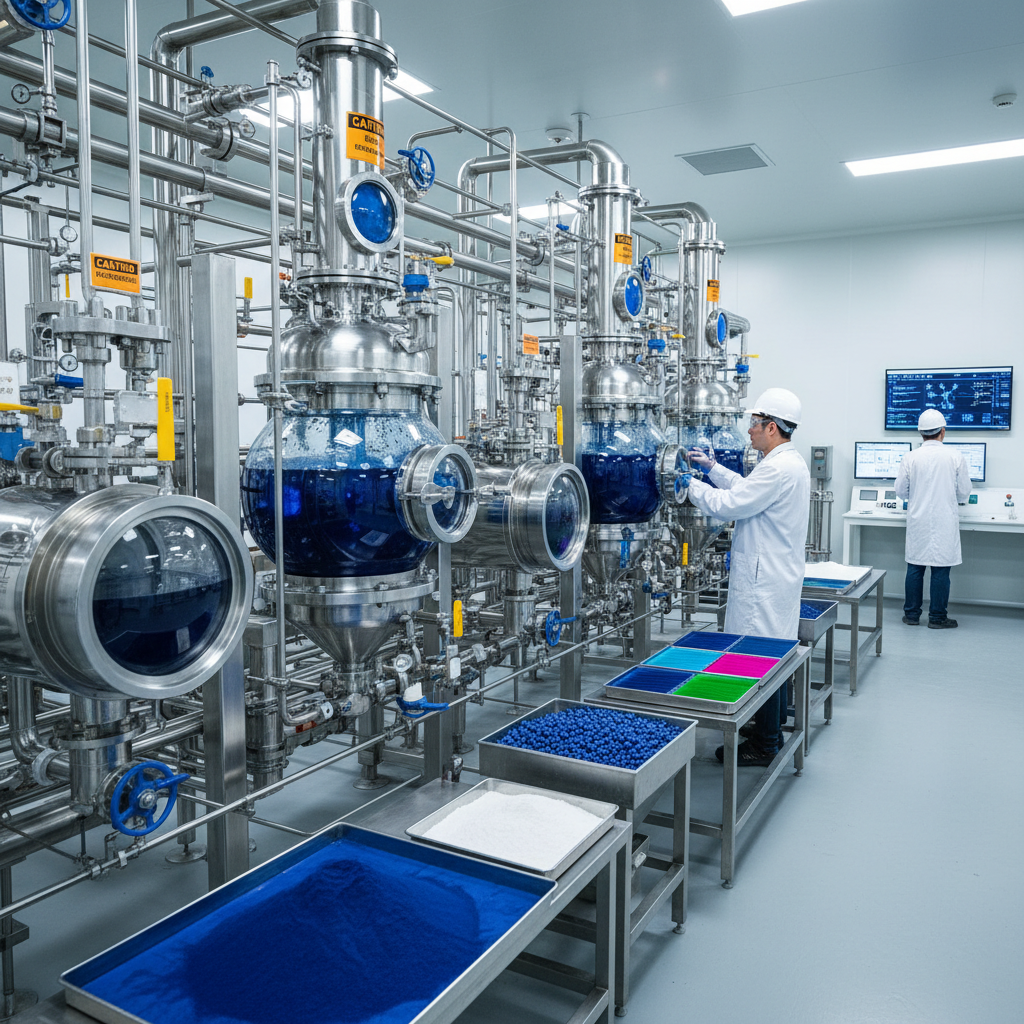
The global textile industry relies heavily on the precise application of odm synthetic indigo to achieve the iconic blue shades characteristic of high-end denim. Unlike natural extracts, synthetic alternatives provide the standardization and purity required for industrial-scale manufacturing, ensuring that millions of garments maintain a cohesive color profile. This article examines the technical requirements and procurement strategies for sourcing high-performance synthetic dyes.
For textile engineers and procurement officers, selecting a dye involves more than just color matching; it requires an analysis of solubility, reduction potential, and adherence to global safety regulations. The transition from traditional methods to advanced synthetic processes has allowed manufacturers to optimize water usage and reduce waste while increasing the intensity of the blue hue. Understanding these chemical nuances is critical for maintaining competitive edge in the apparel market.
Readers will discover the essential criteria for evaluating dye quality, from particle size in granular forms to the chemical stability of the final pigment. We will also explore how manufacturing capabilities—such as those provided by specialized chemical groups—impact the supply chain stability and final product longevity. By the end of this guide, professionals will have a framework for selecting materials that balance aesthetic appeal with operational efficiency.
The Chemistry of Commercial Denim Dyeing
Commercial dyeing is a complex redox process where the insoluble dye must be converted into a soluble "leuco" form to penetrate the cotton fiber. This is typically achieved through a reducing agent in an alkaline environment. Once the fabric is immersed and the dye has migrated into the cellulose structure, exposure to air (oxygen) re-oxidizes the dye, locking the pigment into the fiber. The efficiency of this cycle depends entirely on the purity of the synthetic compound used. Impurities in the dye can lead to "spotting" or uneven shading, which increases the rate of fabric rejection in quality control.
Modern synthesis has evolved to create granules and powders that dissolve more predictably, reducing the risk of agglomeration in the dye vat. This precision is what separates industrial-grade pigments from lower-quality alternatives. Furthermore, the integration of odm synthetic indigo into automated dyeing systems allows for tighter control over the "dip" cycles, ensuring that the core of the yarn remains white (the "ring-dyeing" effect), which is essential for subsequent stone-washing and distressing processes in denim fashion.
Strategic Sourcing for Synthetic Blue Pigments
When sourcing synthetic dyes at scale, the focus shifts from simple aesthetics to technical reliability and supply chain resilience. A professional procurement strategy must account for the chemical consistency across different batches to avoid variance in the final garment line. The following dimensions analyze the critical factors that influence the selection of a dye supplier and the performance of the material in a production environment.
Technical Grade Specifications
The quality of a synthetic dye is measured by its strength, purity, and the absence of insoluble matter. High-grade materials ensure that the dyeing process is efficient and that the color saturation is deep and uniform. Buyers should look for specifications that clearly define the moisture content and the percentage of active pigment to calculate the exact dosage required per batch.
| Evaluation Factor | Technical Requirement | Impact on Production | Buyer Checkpoint |
|---|---|---|---|
| Purity Level | Low Insoluble Matter | Prevents fabric spotting | COA Analysis |
| Particle Size | Uniform Granules | Faster dissolution rate | Visual Inspection |
| Moisture Content | < 6% | Accurate weight dosing | Lab Verification |
| Shade Consistency | Delta E < 1.0 | Uniform color across lots | Spectrophotometry |
| Solubility | Rapid Reduction | Reduced cycle time | Vat Test |
| Strength % | Defined (e.g., 180-240) | Predictable color depth | Titration Test |
Application in Cotton and Blends
While primary use is in 100% cotton denim, synthetic dyes must also perform on cotton-polyester or cotton-viscose blends. The affinity of the dye for the fiber determines the "wash-off" rate. High-quality synthetic pigments are designed to maximize the retention rate, meaning less dye is wasted in the effluent and more remains on the fabric, enhancing the richness of the blue tone.
Consistency in Batch Production
In B2B manufacturing, batch-to-batch consistency is the highest priority. A slight shift in the chemical composition of the dye can result in thousands of meters of fabric being off-shade. Reliability is guaranteed when a manufacturer employs a rigorous internal quality control system and maintains an independent laboratory to test every shipment before it leaves the factory.
Stability and Light Fastness
Denim is subject to intense UV exposure and repeated washing. Synthetic dyes must be formulated to resist premature fading. The stability of the molecular bond between the indigo molecule and the cellulose fiber ensures that the garment retains its sophisticated look over its entire lifecycle, meeting the durability expectations of global consumers.
Environmental Compliance Standards
Modern textile mills must comply with strict regulations regarding harmful substances. Sourcing from a manufacturer that adheres to international environmental standards is non-negotiable. This includes ensuring the dye is free from prohibited amines and that the production process minimizes the release of hazardous chemicals into the atmosphere.
Cost-Efficiency in Large-Scale Dyeing
Cost-effectiveness is not just about the price per kilogram, but the "yield per dip." A more concentrated and pure dye allows for lower consumption levels to achieve the same depth of shade. By reducing the amount of dye needed and the number of dipping cycles, factories can significantly lower their operational costs and energy consumption.
Supplier Manufacturing Capacity
For global brands, the ability of a supplier to scale production is critical. Companies with large-scale facilities, such as plants with capacities of 20,000 tons per year, provide a safety buffer against market volatility. Diversified production sites across different regions ensure that logistics remain fluid even during regional disruptions.
FAQ
What is the primary difference between natural and synthetic indigo dyes?
Synthetic versions provide absolute consistency in purity and shade, which is impossible with natural extracts. They allow for precise industrial dosing, higher concentration levels, and a more predictable reaction during the reduction and oxidation process, making them the standard for commercial denim production.
How does particle size affect the dyeing process?
Uniform particle size, especially in granular forms, ensures a consistent dissolution rate in the dye vat. If the particles are uneven, some may dissolve too slowly, leading to "undyed" streaks or spots on the fabric, while others may cause over-saturation in localized areas.
What should I check in a Certificate of Analysis (COA) for synthetic dyes?
A buyer should specifically verify the strength percentage, the moisture content (ideally ≤ 6%), and the level of insoluble matter. These metrics directly correlate to how the dye will perform in the vat and the actual amount of active pigment available for the fabric.
Can these dyes be used on fibers other than cotton?
Yes, while optimized for cotton, they are effective for hemp, viscose, and cotton-blended fabrics. However, the absorption rate may vary depending on the blend ratio, and adjustments to the reduction time may be necessary to ensure uniform coverage.
How do I evaluate the reliability of a dye supplier?
Evaluate their production capacity, the presence of an independent QC laboratory, and their export history. A supplier with a long track record of exporting to diverse markets (such as Germany, Brazil, and India) typically has a better understanding of international quality and compliance standards.
What is the shelf life of synthetic indigo powder or granules?
Typically, these products have a validity of two years when stored under proper conditions. It is essential to keep the material in a dry area with adequate ventilation, avoiding direct sunlight and dampness to prevent degradation or clumping.
References and further reading
- Industrial Chemistry of Textile Dyes and Pigments - Technical Manual
- International Standard for Indigo Dye Purity and Testing (ISO)
- Global Denim Manufacturing Sustainability Report
Related Articles