The global textile industry is currently witnessing a significant transition toward sustainable dyeing methodologies, with a particular focus on the resurgence of organic blue pigments. The demand for odm natural indigo fabric reflects a broader market shift where fashion brands are seeking a balance between traditional aesthetic appeal and modern environmental compliance.
This shift is primarily driven by the stringent regulatory pressures regarding wastewater management and the chemical footprint of synthetic dyes. For manufacturers, the challenge lies in achieving the legendary depth and "aging" characteristics of indigo while maintaining industrial-scale consistency and color fastness, which are often volatile in pure natural extracts.
This technical analysis examines the intersection of traditional indigo applications and modern chemical engineering. We will explore how specialized vat dyes, such as those provided by the odm natural indigo fabric supply chain, enable designers to create sustainable denim that meets rigorous commercial durability standards.


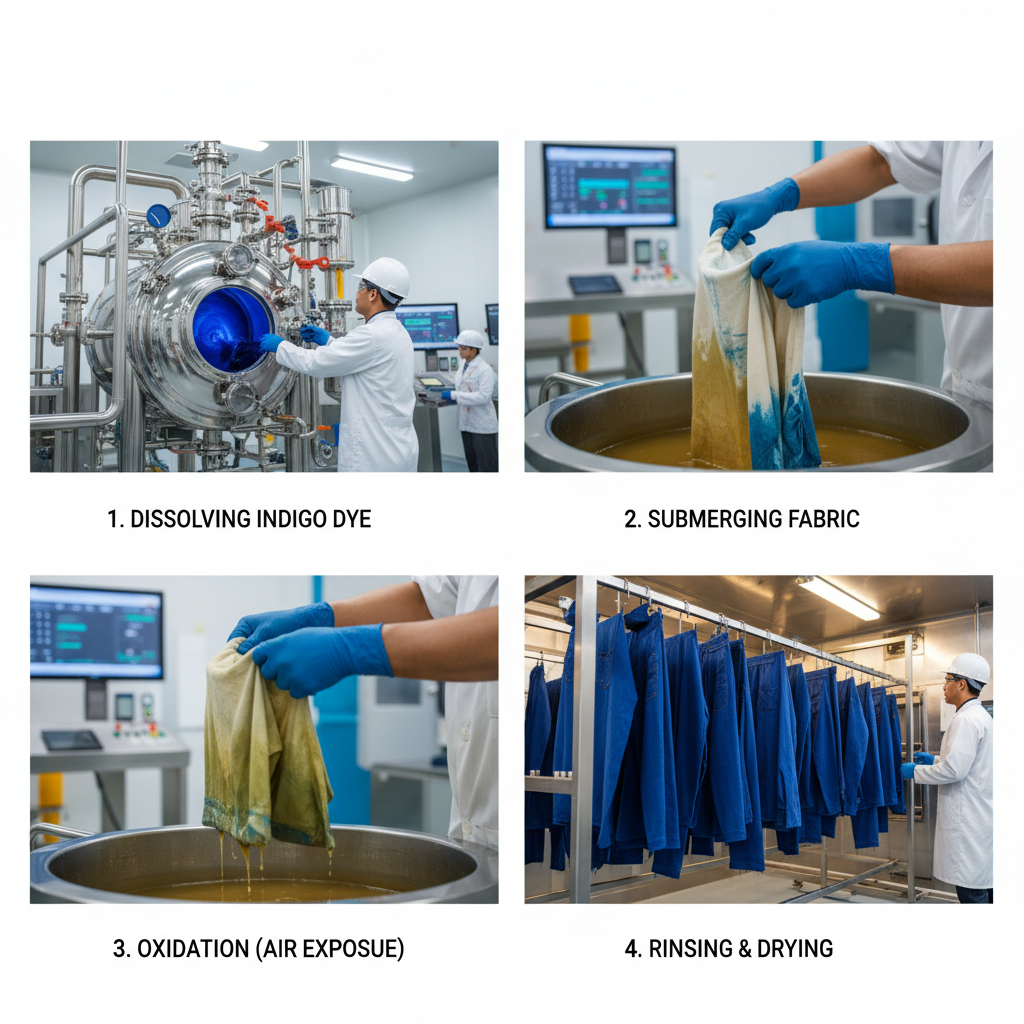
The production of indigo-dyed fabrics relies on a complex chemical process known as vat dyeing. Because indigo is insoluble in water, it must be reduced to a soluble form (leuco-indigo) using a reducing agent in an alkaline environment. Once the cotton yarn is immersed in this solution, exposure to oxygen triggers an oxidation reaction, returning the dye to its insoluble blue state and trapping the pigment within the fiber.
This unique ring-dyeing effect is what allows denim to develop its characteristic fade over time, as the pigment on the surface of the yarn wears away while the core remains blue. For those specializing in odm natural indigo fabric, mastering this oxidation-reduction cycle is critical for ensuring uniform color distribution.
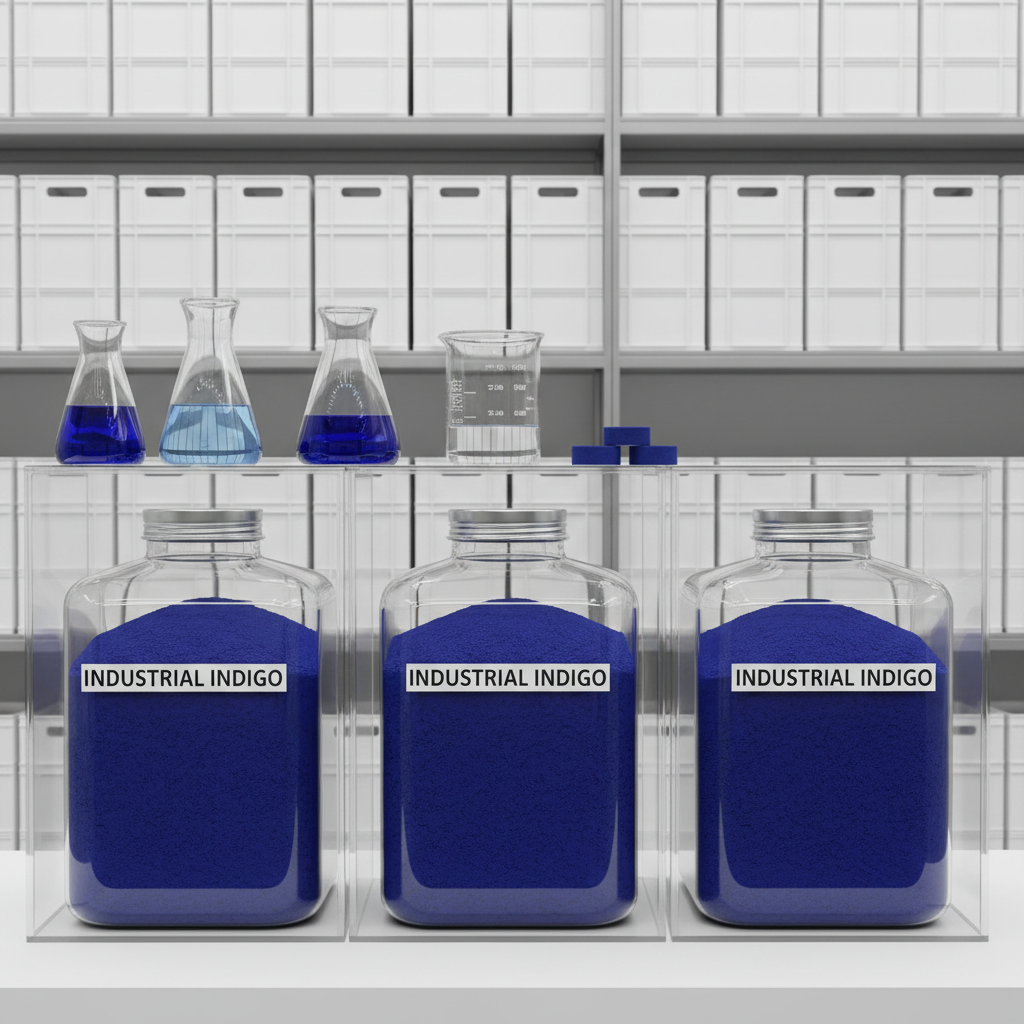
From an engineering perspective, the quality of indigo is defined by its purity, strength, and moisture content. Standard professional-grade powders typically maintain a moisture level ≤ 2-5%, as excess water can lead to clumping and uneven dissolution in the vat, resulting in "streaking" or spotting on the finished fabric.
Strength is another pivotal metric, often categorized into crude powder or refined strengths such as 100 or 110. Higher strength concentrations allow for more precise color matching and reduced chemical waste during the reduction process. This precision is essential for commercial denim manufacturers who require identical shades across millions of yards of fabric.
The physical appearance—typically a dark blue powder—serves as the first indicator of quality. When these specifications are strictly controlled, the resulting odm natural indigo fabric exhibits superior vibrancy and consistent absorption across various cotton yarn grades.
One of the most persistent challenges in dye engineering is the conflict between achieving deep, long-lasting hues and minimizing environmental impact. Traditional synthetic indigo processes often relied on heavy reducing agents that contributed to high COD (Chemical Oxygen Demand) levels in wastewater.
The technical trade-off here is the cost of higher-purity precursors versus the operational savings in wastewater treatment. Brands moving toward sustainable fashion are increasingly accepting higher initial pigment costs to achieve a competitive edge in eco-compliance and consumer trust.
To understand the viability of different indigo options, engineers often use normalized scoring to compare technical attributes. These scores represent a relative evaluation of how various pigment types perform across key industrial metrics.
When evaluating odm natural indigo fabric components, we focus on the balance between solubility, color depth, and eco-friendliness.
In a typical industrial deployment, Bromo Indigo is utilized to create high-end denim jackets, jeans, and shorts. Its versatility allows it to be paired with secondary processing techniques such as distressing, ozone bleaching, and laser printing. Because it offers a range of shades from rich, deep blues to vintage-inspired hues, it provides designers with a broader creative palette without sacrificing the structural integrity of the fabric.
For manufacturers implementing an ODM (Original Design Manufacturing) model, the ability to offer a sustainable "natural look" through high-performance dyes is a key value proposition. This ensures that the final product not only meets the aesthetic expectations of the consumer but also adheres to the durability standards required for commercial retail.
The next phase of indigo evolution is likely to focus on "closed-loop" dyeing systems. These systems aim to recapture and reuse the reducing agents and water used in the vat process, further decreasing the environmental footprint of odm natural indigo fabric production.
Additionally, there is increasing research into bio-synthetic indigo, produced via microbial fermentation. While currently expensive, these biological alternatives could eventually replace chemical synthesis entirely, offering a truly carbon-neutral path for the denim industry.
The integration of digital dyeing technologies, which apply pigment only where needed, will also complement the use of high-efficiency vat dyes, reducing overall chemical consumption by up to significant percentages in high-precision applications.
Choosing the right pigment requires a systematic evaluation of the intended garment's lifecycle and the manufacturer's technical capacity. The following matrix provides a comparative overview based on different configuration profiles.
Different profiles are tailored to specific market segments, ranging from budget-conscious mass production to luxury sustainable fashion lines.
By aligning the dye specification with the deployment scenario, manufacturers can optimize both cost and quality.
| Configuration Type | Primary Specification | Performance Factor | Recommended Use Case |
|---|---|---|---|
| Basic Grade | Crude Powder | Standard Fastness | Mass Market Denim |
| Standard Grade | Strength 100 | High Uniformity | Commercial Apparel |
| Premium Grade | Strength 110 | Superior Depth | Designer Jeans |
| Eco-Focused | Bromo Indigo | Low Pollutant | Sustainable Collections |
| Vintage Profile | Modified Vat | High Fade-ability | Retro-style Denim |
| Industrial Baseline | Mixed Indigo | Balanced Cost | General Textile Use |
Moisture content above the recommended 2-5% range can significantly hinder the dissolution of the indigo powder in the vat. Excess moisture often leads to the formation of clumps, which creates uneven dye distribution on the cotton yarn. This results in visible streaks or spots on the final fabric, which is a primary cause of quality rejection in industrial denim production.
Bromo Indigo is engineered to optimize the dyeing process by reducing the overall volume of water and chemicals required for the reduction and oxidation cycles. It minimizes the production of harmful pollutants during synthesis and application, providing a more eco-friendly alternative that helps brands meet stringent global environmental standards without compromising color vibrancy.
These numbers refer to the concentration of the active dye pigment in the powder. Strength 110 provides a higher pigment density than Strength 100, allowing manufacturers to achieve deeper blues with less powder. This leads to greater precision in color matching and can reduce the chemical load in the dyeing vat, though it requires more precise dosing equipment to avoid over-saturation.
Yes, these dyes are specifically designed for the denim industry and are highly compatible with distressing, bleaching, and printing. The ring-dyeing characteristic ensured by professional vat dyes allows the surface pigment to be removed during stone-washing or laser-distressing while the core remains intact, creating the high-contrast a-esthetcis desired in modern denim.
Indigo powder must be stored in a cool, ventilated, and dry warehouse. Because it is sensitive to moisture and light, packaging must remain airtight. Exposure to rain or sunlight can degrade the chemical stability of the dye, leading to unpredictable results during the vatting process. Proper storage ensures a shelf life of up to two years.
The primary application is the production of denim cloth. By dyeing the warp yarns in indigo and leaving the weft yarns white (or undyed), manufacturers create the classic blue denim look. This specific application requires a dye that can penetrate the yarn surface without fully saturating the core, a technical requirement that high-quality vat indigo dyes are specifically designed to meet.
The transition toward high-performance, sustainable dyeing agents is no longer optional for the denim industry; it is a technical necessity. By integrating precise specifications—such as low moisture and high strength—with innovative chemical variants like Bromo Indigo, manufacturers can successfully deliver odm natural indigo fabric that satisfies both luxury quality and environmental ethics.
For procurement teams and engineers, the focus should remain on the synergy between pigment purity and the efficiency of the reduction process. Investing in refined chemical precursors today ensures a scalable, compliant, and aesthetically superior product line for the future of sustainable fashion.